



Tendon Injuries in Horses – Recognition, Treatment and Prevention
Tendon injuries are amongst the top 10 most common injuries in horses. Read on to find out why tendon injuries in horses are not uncommon, and get an overview of the causes, symptoms, treatment options and preventive measures. This will ensure you’re prepared in the event of an acute tendon injury affecting your horse.
If you’d like to learn more about treatment and rehabilitation measures, as well as which ointments and therapy boots can be helpful, check out our informative guide „Treatment options for tendon injuries in horses“.

The tendons of the horse – A delicate structure
Horse’s legs consist of relatively few muscles, and are mainly composed of bones, cartilage, tendons and ligaments. Tendons are bundles of fibres that are closely connected to muscles and bones. They serve to transfer force into kinetic energy. Horses have three types of tendons of particular note, those most commonly affected by injury:
- Deep digital flexor tendon (subject to heavy strain when pushing off the ground)
- Suspensory ligament (behind the deep digital flexor tendon)
- Superficial digital flexor tendon (subject to heavy strain when the leg is planted on the ground, and can stretch up to 16% of its normal size, which is particularly noticeable in show jumpers when landing)
Horse’s tendons are fully developed at around 6 years of age, whereas muscles mature earlier. This means that a horse that appears to be „fully grown“ from the outside may not yet have fully developed tendons and ligaments. Horses subjected to heavy strain at an early age through sporting activities are therefore at greater risk of tendon injury.
If minor or major tears occur in the fibres, or even a tendon rupture, scar tissue forms during the healing phase. This tissue is less elastic and less resilient, meaning that even after the tendon has fully healed, it may still be at increased risk of injury.
Tendon injuries to the hind legs are also possible, but the front legs are far more commonly affected by tendon damage.
Symptoms: How can I recognise tendon injuries in my horse?
Typical symptoms of a tendon injury are:
- Swelling of the affected area, where the leg is bent like a banana
- Warmth, which indicates inflammation
- Sensitivity to touch in the inflamed area
- Favouring of the affected leg
- Lameness as a typical pain response, with more severe lameness on soft ground than hard ground, due to greater strain on the tendon
There are also cases of tendon injuries without lameness, which can make early diagnosis difficult. Warmth and slight swelling are the first warning signs that something is wrong, requiring an immediate response. In cases of chronic tendon injuries, the horse will suffer from recurring leg problems, and the injury will take longer than usual to heal.

A tendon injury in a horse is a case for the vet!
We recommend consulting a vet at the first sign of lameness and a suspected tendon injury. Until the vet can arrive at the yard, first aid for tendon injuries should consist of the following: immobilise and cool the area.
After a clinical examination involving palpation of the tendon, the vet may perform an ultrasound to conclusively determine the extent and severity of the tendon injury.
Causes: Why are tendon injuries one of the most common injuries in horses?
As running animals, horses‘ tendons are exposed to very high levels of stress: during training, in social interactions, and under poor husbandry and training conditions. In addition, the tendons in a horse’s leg lie close to the surface and are not protected by muscles, making them susceptible to blunt trauma.
What is it about tendons that makes them such a problem? The fibre bundles have a very poor blood supply, meaning it can take up to six months for their tissue to regenerate. The slow healing process and sometimes gradual onset make tendon injuries in horses a dreaded problem. Even after healing, the risk of re-injury remains high, as the scar tissue that forms is less elastic and less resilient.
In addition to being used prematurely during sporting activities, other factors can cause tendon injuries in horses:
- Excess weight
- Lack of essential nutrients such as collagen, omega fatty acids and sulphur
- Muscle fatigue (due to their close connections, tired muscles absorb less load and the tendons become overloaded)
- Inadequate training with poor musculature
- Acute overload (falls, kicks, stumbling)
- Poor hoof conformation and poor shoeing (See our guide „What the condition of the hooves says about the health of the horse“)
- Hereditary predisposition to weak tendons
A complete tendon rupture is also possible, for example due to cuts from horseshoes, fence wire or sharp-edged rubbish in the paddock (Read our tips on paddock care).
The wide range of treatment options
Healing tendon injuries in horses takes time. Even if you can’t necessarily speed up the healing process, you can reduce scar tissue formation and prevent further injuries that could delay healing. There are a number of options available to you, which we discuss in our guide to treating tendon injuries in horses.
WARMING & COOLING BOOTS FOR TENDON INJURIES
-

Felix Bühler
4.8 4
4
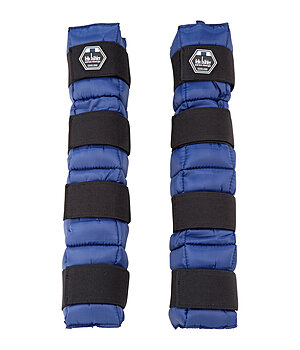
Ice Boots
from £27.904.8 4
-
Felix Bühler
4.3 3
3
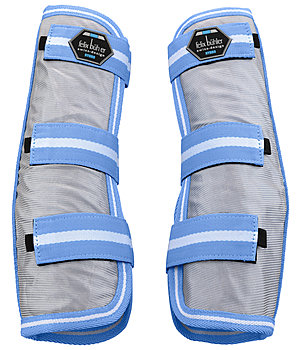
Therapy Boots Hydro
£59.904.3 3
-
Felix Bühler
4.8 4
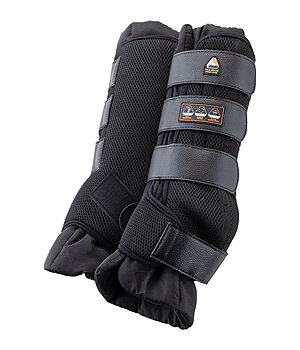
Summer Stable Boots Ceramic Rehab
£74.904.8 4
-
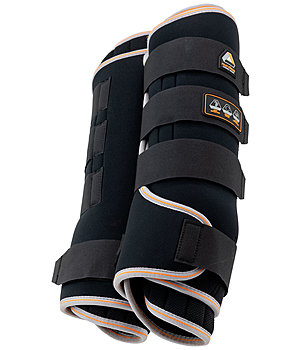
Felix Bühler
5.0 2
Stable Boots Ceramic Rehab
£74.905.0 2
-
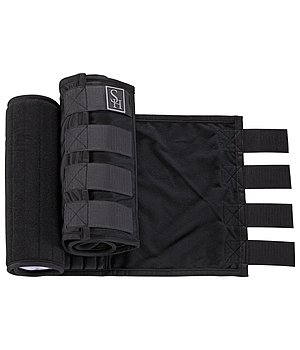
SHOWMASTER
4.3 3
Hot/Cold Therapy Boots
£32.90£25.904.3 3
-
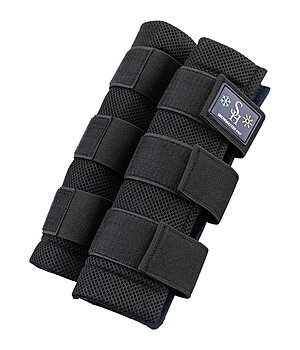
SHOWMASTER
Warming/Cooling Boots Compact
£16.90 -
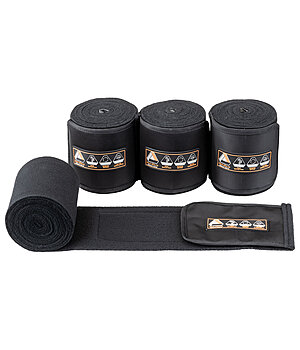
Felix Bühler
5.0 1
Fleece Bandages Ceramic Rehab
£38.90£29.905.0 1


Rehabilitation phase after a tendon injury – Tips and measures
The acute phase is followed by the long road to rehabilitation after a tendon injury. Depending on the extent of the tendon injury, it can take up to a year for the tendon to heal to the point where the horse can be put under normal strain again, if at all.
Be sure to follow the vet’s instructions, and schedule regular check-ups so the treatment plan can be adjusted as needed.
Controlled training after a tendon injury starts with hand or tack walking on firm ground. Soft ground would just put unnecessary strain on the tendons. Build up the walking sessions step by step. Keep in mind that it takes about 28 days for the tendon fibres to gradually rebuild in the longitudinal direction, making them more resilient. It is only when the horse is able to move without discomfort at all gaits, can it be ridden and fully exercised again.

Preventing tendon injuries in horses – Tips for horse owners
Prevention is better than treatment – this also applies to our horses‘ tendon health. Tendon injuries cannot always be prevented, but you can reduce the risk of injury. You can do the following to prevent tendon problems in horses:
- Ensure sufficient free movement from foalhood onwards.
- Daily, free movement for several hours, ideally turnout in a paddock or field.
- Proper warm-up and cool-down, especially important in winter and for horses that spend most of the day in their stables.
- Avoid muscle fatigue/overstraining.
- Apply cooling ointments to horses‘ legs after training.
- Rug sensitive horses in winter.
- Take deviations from normal gait patterns seriously and react early.
- Provide nutrients for a stable musculoskeletal system: manganese, selenium, collagen, magnesium. You can find more information on this in our guide on nutrition for tendon injuries.