


What the condition of your horse’s hooves says about its health
In the wild, horses can travel long distances in search of food and water. On average, a wild horse covers 10 to 20km per day – depending on food requirements and ground conditions, this can increase significantly. Horses are running animals that need exercise to stay healthy.

In the third part of our health series, we focus on the hooves that carry our four-legged friends, who weigh several hundred kilograms, safely through life. Find out in our guide what information you can gather from the condition of the hooves, and which factors are important for keeping them healthy!
How should a healthy horse hoof look?
A healthy hoof is smooth and grows evenly, with soft, elastic horn growing at the coronet. The hoof wall should be straight and the toe short. Viewed from below, the sole should be evenly formed, with an arrow-shaped frog that is also smooth and even. The white line should be closed throughout.
Allround healthy hooves
When assessing the condition of the hooves, you should consider every possible angle. The hoof may appear intact from the outside, even though the frog could already be showing signs of decay.


Why are healthy hooves so important?
Healthy hooves are usually half the battle when it comes to ensuring your horse is generally healthy. Did you know that hooves act as a kind of pump?
Since the heart is quite small in comparison to the rest of the horse’s body, it needs additional support to supply blood to all the limbs. The hooves ensure constant blood supply through the so-called hoof mechanism, when the horse lifts and lands its feet, thus stabilising the entire cardiovascular system. This highlights the enormous importance of your horse’s hooves.
Basic requirements for healthy hooves
While the growth and regeneration of a healthy hoof horn depends on the horse’s internal health, maintaining the long-term health of the hoof tissue depends on optimal care and species-appropriate keeping. Therefore, the cornerstones of healthy hooves are made up of a combination of external and internal factors.
In addition to a well-functioning metabolism, an optimal nutrient supply is crucial for healthy hoof growth. With the right feed, you can already make a significant contribution to your horse’s hoof health. In addition, you should always watch for signs of internal disease (e.g., metabolic disorders such as EMS, etc.) and consult with a veterinarian to have these treated.
When it comes to maintaining healthy hooves, it’s particularly important to pay attention to the following areas:
Keeping and Feeding
Keeping:
- Rigorous implementation of stable hygiene
- Keeping horses on varied natural surfaces, to ensure optimal hoof wear and a balanced ratio between horn growth and wear
- Opportunity to achieve species-appropriate exercise
- Optimal hoof trimming and care, and, if necessary, shoeing
- Treatment of diseases (especially of the hooves and metabolism)
Feeding:
- Species-appropriate feeding
- Supplements to address nutrient deficiencies
FEED FOR HEALTHY HOOVES
-

Original Landmühle
4.4 8
8
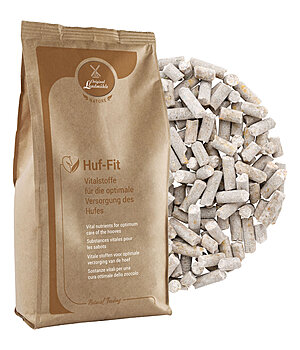
Hoof Fit
(£16.90 / 1 kg)£16.904.4 8
-
Original Landmühle
5.0 2
2
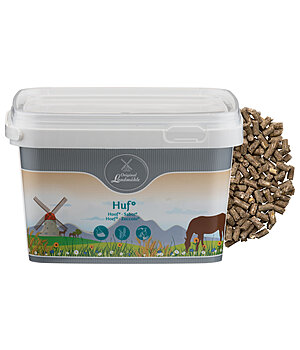
Hoof +
(£18.25 / 1 kg)£21.905.0 2
-
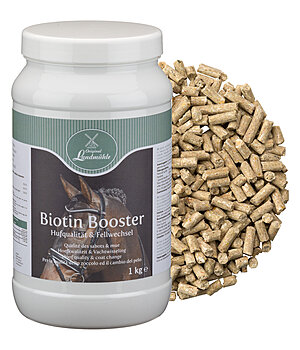
Original Landmühle
4.8 6
Biotin Booster
(£38.90 / 1 kg)£38.904.8 6
-
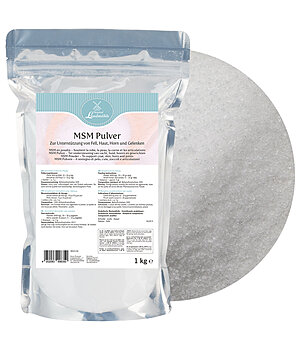
Original Landmühle
4.9 11
MSM Powder
(£25.90 / 1 kg)£25.904.9 11
-
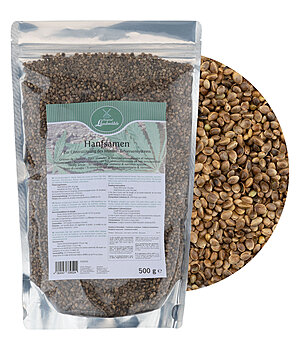
Original Landmühle
4.3 3
Hemp Seeds
(£19.98 / 1 kg)£9.994.3 3
-
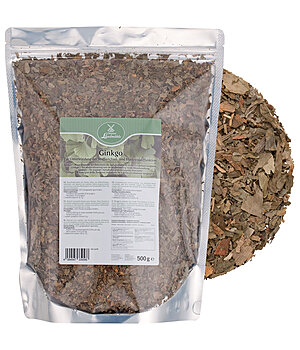
Original Landmühle
Ginkgo
(£35.80 / 1 kg)£17.90 -
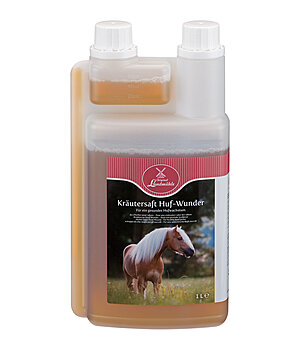
Original Landmühle
4.5 2
Herbal Liquid Hoof Miracle
(£21.90 / 1 kg)£21.904.5 2
-
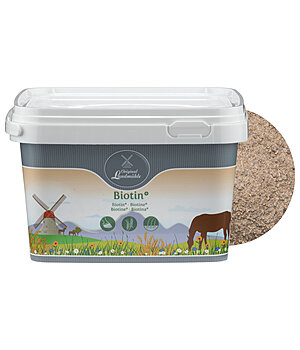
Original Landmühle
Biotin +
(£32.42 / 1 kg)£38.90 -
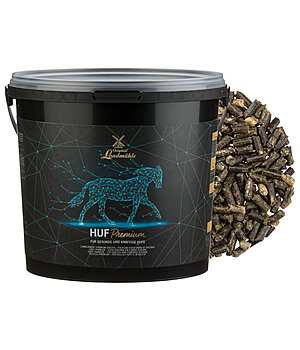
Original Landmühle
5.0 1
Hoof Premium
(£25.93 / 1 kg)£38.905.0 1


What issues can hooves develop, and what problems do these indicate?
| How does the hoof look? | What could be the underlying cause? |
|---|---|
| hoof/growth rings The hoof isn’t smooth; visible ridges and folds on the hoof wall | Very rare: Change in diet, change in weather More common: Impaired metabolism caused by illness, stress, medication Rings also appear after laminitis |
| Swelling along the coronet | Excessive amounts of selenium Laminitis Hoof cancer/hoof abscess Pododermatitis |
| Flaky, cracked skin around the coronet, dull hair | Insufficient moisture, requires more care around the coronet |
| Brittle/fragile horn (cracks, splits, splinters) | Hoof fungus Nutrient deficiency Incorrect hoof trimming Poor ground conditions Insufficient moisture Metabolic disorders, obesity |
| Unpleasant odour | Thrush Hoof fungus Hoof cancer |
| Warm, throbbing hoof with sensitivity to pressure | Laminitis Hoof abscess |
| Slimy, brittle and dark discoloured frog | Thrush |
| Soft hoof texture | Ground conditions that are too moist |
As you can see, there are usually many possible causes for hoof changes, and there are numerous other symptoms that can occur in hooves. It is important to keep in mind that the combination of internal factors such as nutrition and metabolic disorders and external factors such as keeping conditions and hoof care form the best basis for healthy hooves.
If you notice anything unusual about your horse’s hooves, you should consult your vet immediately to prevent serious hoof diseases.
Further Reading: Series ’What does … say?‘
Part 1: What does your horses droppings say about its health?
Part 2: What does your horses coat say about its health?
Part 3: What the condition of your horse’s hooves says about its health