


The right saddle accessories: from girths to stirrup leathers
A well-fitting saddle is the most important thing. But it also needs to be attached to the horse, the rider wants to find support for their feet and the saddle needs to be cared for and protected so that it lasts for many years. So there is no getting around having the correct saddle accessories! Useful saddle accessories include:
- Girths: dressage girths or long girths
- Stirrups and stirrup leathers
- Saddle pad or numnahs
- Possibly half pad, correction pad or similar
- Saddle cover

Girths
A girth holds the saddle on the horse’s back and prevents the saddle and rider from slipping down to one side or the other. But as with the saddles themselves, there is a wide range of lengths and shapes of girths to suit the different shapes of horses‘ torsos.
Dressage girths are mainly used on dressage saddles and some baroque or Spanish saddles, i.e. saddles with long saddle flaps and long billets. The correct length of a dressage girth is determined on the fully tacked up horse. The measuring tape is placed from the lower edge of the saddle flap to the lower edge of the saddle flap. A further 30 cm is subtracted from the measurement result. Long girths, on the other hand, hold jumping and general purpose saddles in place. To determine the correct length of a long girth, measure the length from the second hole (from the bottom) of the billet from one side to the second hole (from the bottom) of the other side. The result of the measurement is the girth length.
In terms of shape, the girth must fit just as well as the saddle. This is because many muscles and fasciae run through the torso, which can be damaged if the girth does not fit properly. The decisive factor here is the girth position (= space between the elbow and the arch of the ribs). The following saddle girth types are available:
- Anatomical girth: Girth is cut wide at the front and back in the elbow area. Anatomical girths are well suited for horses with a proper girth groove.

- Asymmetrical girth: The girth is only cut wide at the front in the elbow area, the other side is straight. Asymmetrical girths are suitable for horses with a girth groove less prominent.

- Crescent girth: The girth is only cut back at the front in the elbow area and curves forward similar to the ribcage. Crescent girths are suitable for big-bellied horses with narrow chests, whose saddle often slides forward.

- Athletic girths: This girth is the opposite of crescent girths. The elbow room is also at the front, but the girth is shaped towards the rear. Athletic girths are therefore suitable for slender horses with a wedge-shaped torso, where the saddle tends to slide backwards.


How does the girth fit correctly?
Ideally, the saddle determines the position of the girth. If the saddle is placed in the correct position on the horse’s back, the billets also indicate the girth position. There should be room for the palm of your hand between the girth and the elbow.
If the girth length has been measured correctly, the horse’s elbow will not bump against the buckles or girth edges, and the horse will not walk foreshortened. This is especially true for dressage girths. The elbow should not bump against the buckles. Instead, the girth should reach to the lower edge of the saddle flap.
Stirrup leathers and stirrups
Stirrup leathers and stirrups are an indispensable part of the saddle to ensure the correct hold in the saddle or to be able to ride in a two-point seat. The stirrup leathers are attached to the stirrup bar of the saddle tree and can be correctly adjusted to different leg lengths due to their perforation.
In addition to the classic stirrup leathers, the excess of which is tucked into a tab on the saddle flap, there are short stirrup leathers. These are often used on leisure or Icelandic saddles. The buckle is located at the bottom, directly on the stirrup, and thus prevents any pressure on the inner thigh.

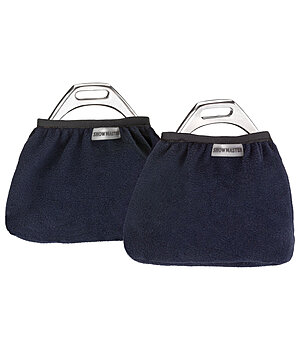
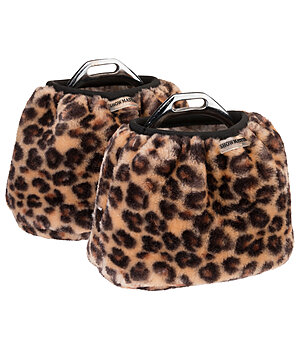
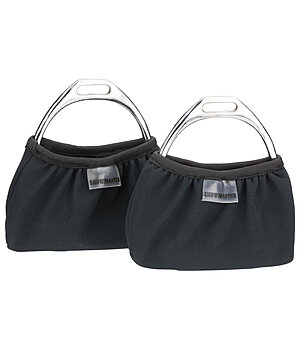
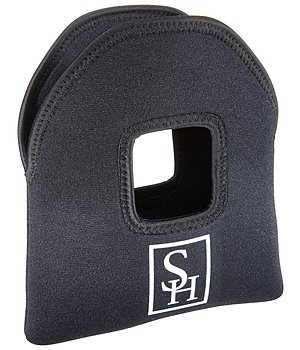
To protect the saddle leather, you can slip soft stirrup covers over the stirrups. These prevent dirt or the material of the stirrups from scratching the saddle leather.
To protect the saddle: stirrup covers
-

SHOWMASTER
4.8 13
13
Fleece Stirrup Covers
£5.494.8 13
-
SHOWMASTER
5.0 3
Teddy Fleece Stirrup Covers
£7.995.0 3
-
SHOWMASTER
5.0 1
Stirrup Leather Protectors
£8.995.0 1
-
SHOWMASTER
4.6 5
5
Stirrup Guards
£15.904.6 5


Saddle pads, numnahs and half pads

Saddle pads generally do not have the task of correcting the fit of the saddle. Rather, they protect the saddle leather from horse sweat and dirt. They come in a wide variety of colours and designs, giving the horses‘ outfits that extra something. While numnahs are cut in the shape of the saddle, saddle pads have a rectangular shape and therefore allow more fabric to peek out from under the saddle. Saddle pads and numnahs are not only available in different sizes, but also with different characteristics.
For example, a dressage saddle pad will not fit under a show jumping saddle, as the saddle flap would press on the seam. General purpose saddle pads fit under a wide range of saddles.
Half pads, such as gel pads, correction pads or riser pads, are suitable to correct an ill-fitting saddle temporarily. They can temporarily bring the imbalance of the saddle position back into balance, for example if the horse has lost a lot of muscles during an injury-related rest and is now in rehabilitation training. In principle, however, the saddle should always be refitted first in order to bring it back into balance.
For further reading:
You can find detailed information on the differences between saddle pads, numnahs and half pads in our guide to saddle pads. There you will also find 6 mistakes you can make when using saddle pads.
Other saddle accessories
-
CLARIDGE HOUSE
5.0 2
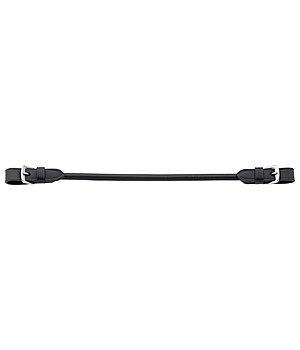
Monkey Grip, Round
£10.905.0 2
-
FENGUR
4.0 6
6
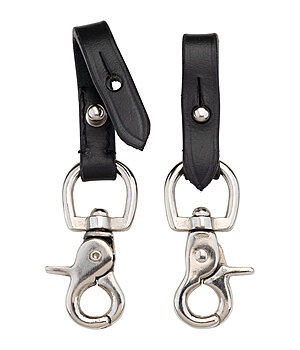
Stirrup Holders
£10.904.0 6
-
SHOWMASTER
4.3 7
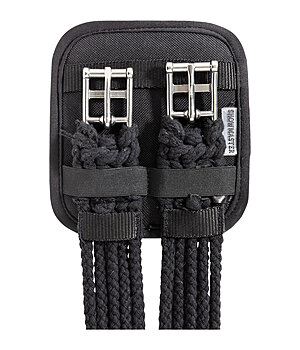
Memory Foam Buckle Protector for Short Girths
£10.904.3 7
-
SHOWMASTER
4.0 1
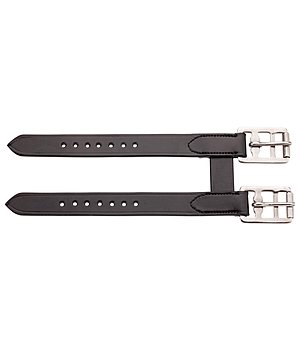
Leather Girth Extension
£14.904.0 1
-
SHOWMASTER
4.0 4
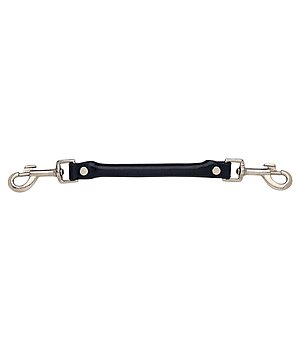
Monkey Grip
£9.994.0 4
-
Felix Bühler
4.5 2
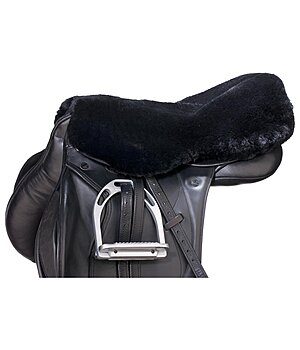
Sheepskin Seat Saver
£59.904.5 2
-
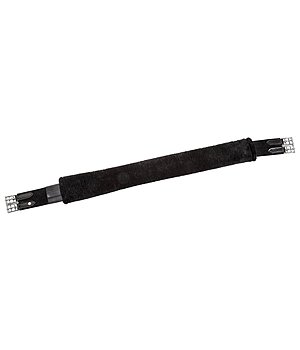
SHOWMASTER
5.0 1
Teddy Fleece Girth Sleeve
£14.905.0 1
-
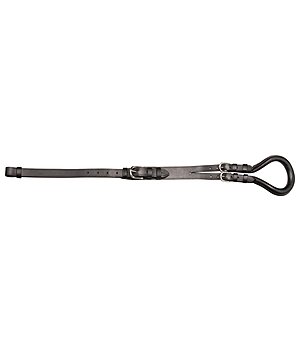
Kramer
5.0 2
Leather Crupper for Ponies & Cobs
£27.905.0 2


