


Rugging, changing rugs & more – We explain when and how many grams!
Rugging and changing rugs for horses is a hotly debated topic among horse owners every year. Particularly in autumn, when the weather can be unpredictable, or during very mild winters, it’s difficult to decide whether a horse needs a rug or not.
Wild horses can no longer be used as a comparison to our domesticated horses. The argument that wild horses don’t need a rug either no longer holds water. This is because horse breeding focuses on characteristics other than weather resistance and hardiness. Furthermore, we now have horse breeds that were not originally bred for the climates in which they are kept. In this article, we shed light on horses natural thermoregulation, their ideal temperature, and whether or not they need a rug.

The key to rugging: Thermoregulation of horses
Thermoregulation allows the horse to maintain its core body temperature within the thermoneutral zone. This temperature range extends from 5 to 25 degrees Celsius. We humans, on the other hand, operate within a range of 25 to 30 degrees. We cannot therefore rely on our own perception when deciding whether or not to rug our horses.
Horses regulate their temperature through
- Eating and digesting
- Standing close together with other horses
- Increased muscle tone (which is why horses are stiffer in winter than in summer)
- Reduced blood flow to the skin
- The development and raising of the winter coat.
It is only at temperatures of around -10 degrees Celsius that thermoregulation really kicks in and the horse needs to generate additional heat.
You can tell that thermoregulation is working properly if fallen snow lies on the horse’s back like a white blanket and does not melt. Even in the rain, only the tips of the hairs get wet; the undercoat and the horse’s skin remain dry.

Thanks to a layer of sebum on the top coat, water rolls off like the lotus effect. Bear in mind that intensive and excessive brushing in winter destroys this sebum layer, leaving the horse inadequately protected.
No longer possible when rugging the horse: raising the hair
An important aspect of thermoregulation is the raising of the hair. When exposed to cold, the hair stands on end due to the arrector pili muscles, providing the horse with a heat-retaining insulating layer. When wearing a rug, this ability is negated. However, if the rug is too thin (e.g. an lightweight turnout rug without a fleece lining), the horse may actually feel colder than without a rug. The choice of horse rug must therefore be made carefully.
Well-intentioned but wrong: Unnecessary rugging harms horses
A small British study has revealed just how much incorrect rugging can harm horses. The results showed that the surface temperature of rugged horses rises significantly above their comfort range. At an outside temperature of 4 degrees, the temperature under a fleece rug rose by 11.2 degrees; with a filled stable rug, it was as high as 15.8 degrees. So if horses are rugged even in mild temperatures because it feels too cold to the owner, they can overheat.
Rugging horses all the time can also be harmful, as it causes them to gradually lose their ability to regulate their body temperature. Just like any other muscle group, the muscles of the hair follicles need to be exercised. And this can only be achieved through exposure to the cold. Rugging horses all the time therefore makes them less resilient to temperature fluctuations. Furthermore, the rug inhibits skin respiration, which is why fungal skin conditions develop more easily – particularly if the rug is not washed regularly.
So when should I rug my horse?
As temperatures drop in autumn, you should start rugging your horse intermittently, adapting to the weather conditions. Cold winter nights below -10 degrees are particularly suitable for rugging. All horses that cannot maintain their own thermoregulation should be rugged. These include:
- Horses with a thin coat, e.g. sport horses
- Horse breeds from warm regions with little winter coat
- Old, thin horses with little subcutaneous fat
- Horses prone to muscle tension
- Sick horses, e.g. with shivering, MIM (formerly PSSM2)
- Horses that are soaking wet or sweating heavily
We deliberately avoid giving precise details on when a horse needs which rug at what temperature. The circumstances vary far too much for that. In principle, no horse needs a rug, but there are too many exceptions to support this general statement. Everyone knows their own horse best and the conditions in which it lives. Therefore, the decision rests with each horse owner. And if you do decide to rug your horse, you might want to consider using a rug only occasionally rather than all the time. This can sometimes be healthier for the horse and its well-being.
For anyone needing a rough guide, take a look at this horse rug overview.

The right rug for every situation
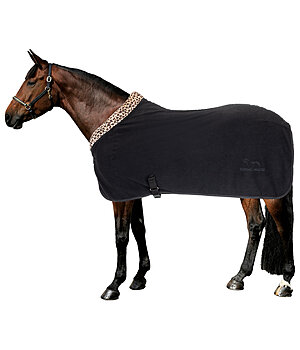
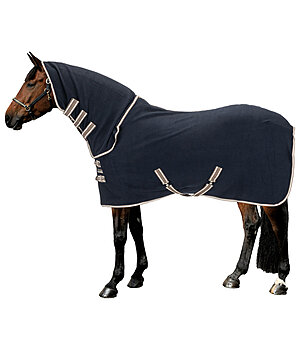
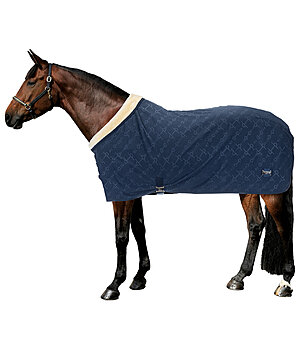
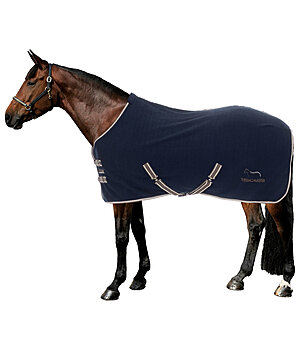
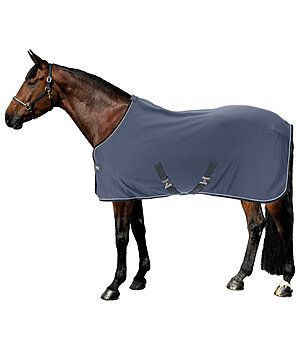
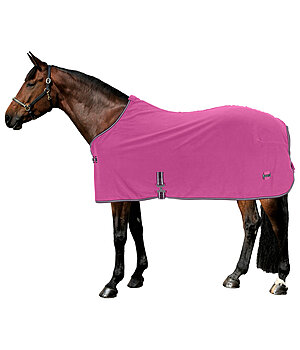
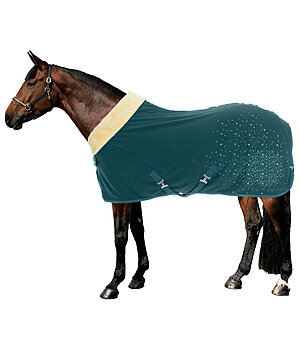
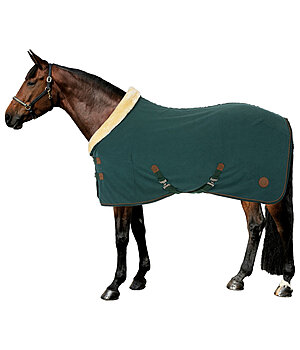
There is one rug every horse absolutely needs: the wicking rug. These are needed back in the stable when drying off after a ride or a rain shower. A wicking rug is also essential during travel in winter. Important: Once the horse is completely dry, any matted hair should be brushed out. Otherwise, it won’t be able to raise its hair in cold weather.
-

THERMO MASTER
Fleece Rug with Teddy Fleece Collar Leora
£54.90 -
 NEWNEW
THERMO MASTER
5.0 3
3
Fleece Rug Activity with Roll-up Neck Piece
£54.90from £43.905.0 3
-
Felix Bühler
5.0 1
Collection Wicking Rug Signature II
£69.90£54.905.0 1
-
 NEWNEW
THERMO MASTER
4.7 10
Fleece Rug Activity
£37.90from £29.904.7 10
-
Felix Bühler
Jersey Functional Wicking Rug Essential
£59.90£47.90 -
 NEWNEW
Felix Bühler
5.0 7
Functional Fleece Wicking Rug Essential
£49.90from £24.955.0 7
-
 NEWNEW
Felix Bühler
4.8 4
Functional Fleece Wicking Rug Sparkling II
£79.90from £64.904.8 4
-
Felix Bühler
5.0 5
Fleece Wicking Rug Timeless Elegance with Teddy Fleece Collar
from £64.905.0 5


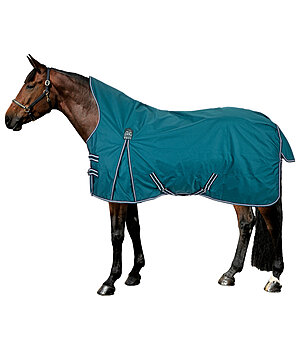
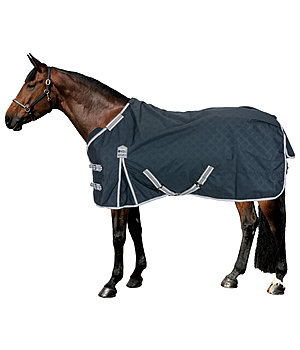
An unfilled turnout rug is also recommended. With this, you are well prepared for any eventuality (coughing, illness). As it is unfilled, it does not interfere with thermoregulation as much. Nevertheless, we recommend a light filling (50g) or a fleece lining so that the horse does not get cold, as described above. Unfilled turnout rugs are ideal for transitional rugging on rainy days or in strong winds.
-
 NEWNEW
THERMO MASTER
4.5 11
11
High Neck Turnout Rug Kalina II, 0g
£89.90from £69.904.5 11
-
THERMO MASTER
Combination System Regular Neck Turnout Rug Janice, 0g
£89.90 -
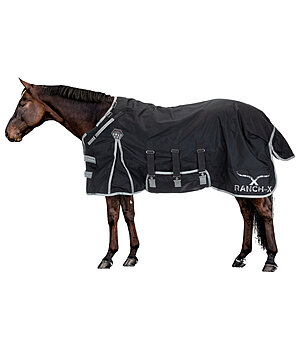
RANCH-X
Turnout Rug All-Rounder Nylon
£149.00 -
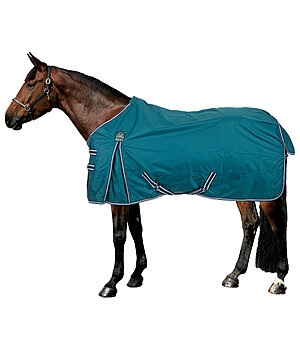 NEWNEW
THERMO MASTER
5.0 6
Turnout Rug Kadir IV, 0g
£79.90from £59.905.0 6
-
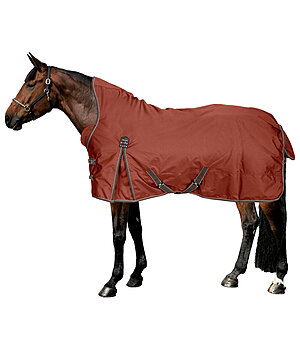 NEWNEW
THERMO MASTER
3.7 3
3
High Neck Turnout Rug Jesco II With Fleece Lining, 0g
£94.90from £47.453.7 3
-
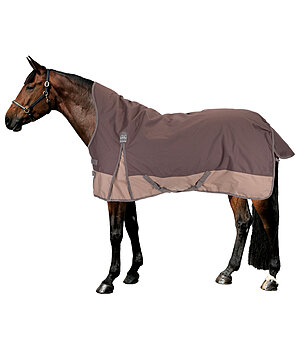
THERMO MASTER
4.7 6
High Neck Turnout Rug Abegail, 50g
£119.004.7 6
-
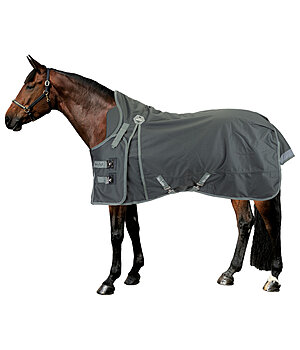
Felix Bühler
4.5 2
High Neck Turnout Rug Side Closure II
£159.00£124.004.5 2
-
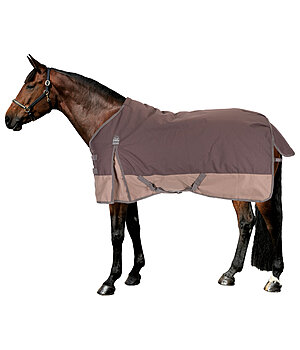
THERMO MASTER
Regular Neck Turnout Rug Aidan, 50g
£109.00


A heavyweight rug is generally required for sick, coughing horses and, more generally, for horses that are sensitive to the cold or have been clipped over large areas. In other words, all horses that are unable to maintain their own thermoregulation.
-
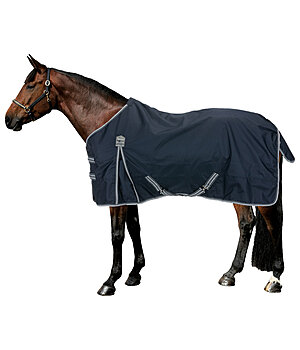 NEWNEW
THERMO MASTER
4.5 2
Turnout Rug Kadir IV, 300g
£99.904.5 2
-
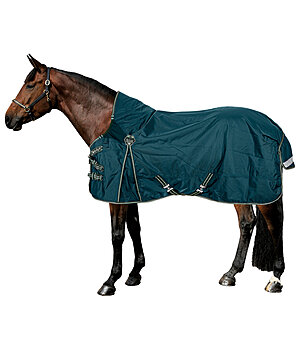
Felix Bühler
5.0 5
High Neck Turnout Rug Perfect Fit Nylon PRO, 300g
£169.005.0 5
-
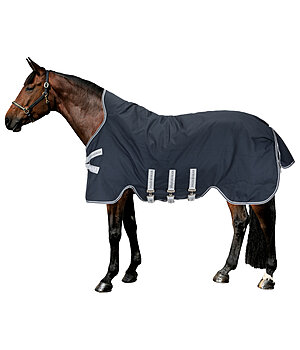
Felix Bühler
1.0 1
1
Turnout Rug with Layer System Fadeah Heavy, 200-400g
£179.001.0 1
-
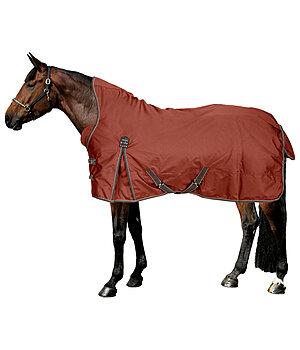
THERMO MASTER
5.0 1
High Neck Turnout Rug Jesco II With Fleece Lining, 200g
£109.00from £84.905.0 1
-
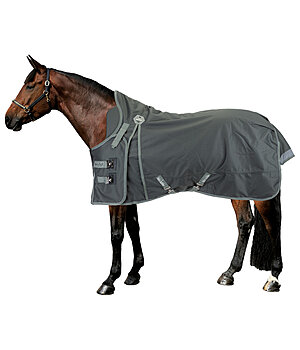
Felix Bühler
High Neck Turnout Rug Side Closure II, 150g
£169.00£134.00 -
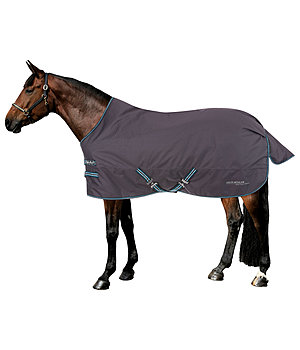
Felix Bühler
5.0 1
4 in 1 Regular Neck Turnout Rug with multi-layer system, 0-300g
£209.005.0 1
-
 NEWNEW
THERMO MASTER
2.0 3
3
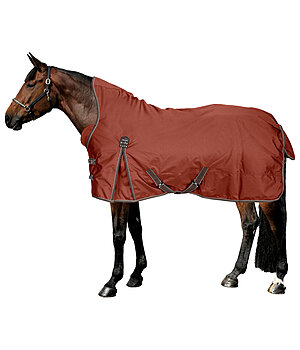
High Neck Turnout Rug Jesco II With Fleece Lining, 100g
£99.90from £79.902.0 3
-
 NEWNEW
THERMO MASTER
5.0 4
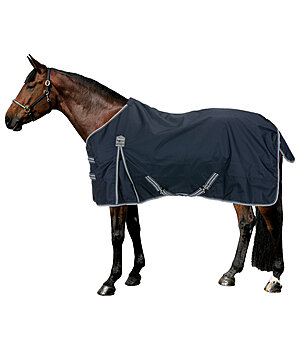
Turnout Rug Kadir IV, 200g
£84.90from £64.905.0 4


